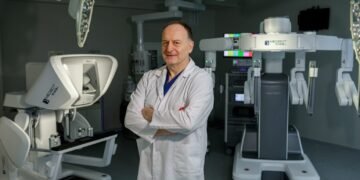


On March 27, 2024, the first robotic surgical operation was performed in Georgia and throughout the Caucasus (Georgia, Armenia, Azerbaijan, North Caucasus). It was the elimination of prostate cancer — a robot-assisted radical prostatectomy — carried out in Tbilisi at the Karazanashvili Robotic Center by Professor Guram Karazanashvili.
The introduction of robotic surgery in Georgia and the Caucasus was a turning point that changed not only the capabilities of one clinic, but of the entire country and the whole Caucasus region. For years, in order to undergo complex oncological and reconstructive robotic surgeries, patients from Georgia and the Caucasus region were forced to turn to clinics in Turkey, Israel, and Europe.
For many, the emergence of robotic surgery in the Georgian and Caucasian medical space may have seemed unexpected; however, for Professor Guram Karazanashvili and his team, it was the culmination of a foundation built over decades. Here are the stages that made this technological leap a reality:
Western standard and professional roots:
Everything began with the formation of Professor Karazanashvili as a surgeon of the highest rank. Many years of experience working in leading global clinics provided him not only with technical knowledge, but also with a Western vision of medical management. This was the period when the foundation of international and regional recognition was laid, which later became the guarantee of the clinic’s success.
Scientific authority and patient trust:
A robot is controlled not by a machine, but by intelligence. Guram Karazanashvili’s constant participation in the largest congresses of Europe, America, Asia, and the Caucasus, where he presented his own scientific and practical achievements, creates the high level of trust necessary for a project of such scale. Thousands of successfully performed surgeries and patient gratitude are the main capital on which the Karazanashvili Robotic Center was built.
Technological “platform” and continuous innovation cycle:
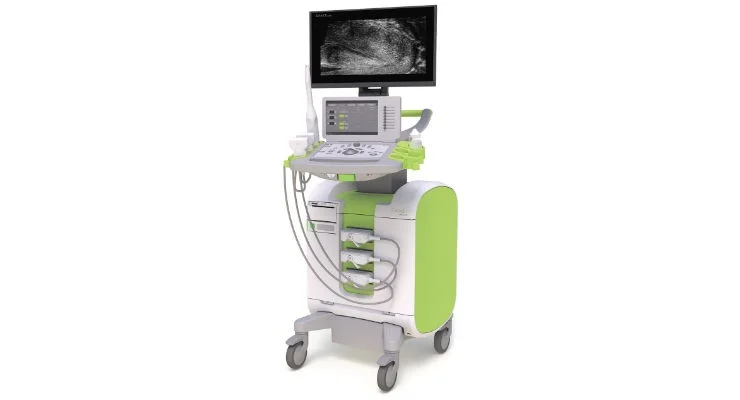 Before the robot appeared, the clinic already functioned as a high-tech hub. For years, the following had been implemented here:
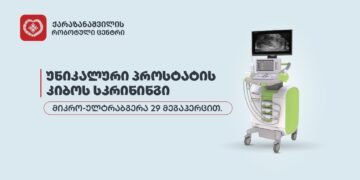
- The latest prostate cancer screening methods: diagnostics based on micro-ultrasound.
- Focal therapy: robotic approaches that preceded the full-scale surgical robot.
- Minimally invasive surgery: the Storz stone fragmentation center and laparoscopy.
Economic trust:
Modern medicine is unimaginable without strong financial partnership. The clinic’s effective management and professional reputation convinced the Georgian banking system to make a multi-million investment. The acquisition of the robotic surgery system became the “crown” of this long-term strategy, elevating Georgia to a new level on the global medical map.
Today, the Karazanashvili Robotic Center has the greatest experience in robotic surgery. Several hundred of the most complex robotic surgeries have been performed at the center, meaning that this technology is fully integrated into everyday clinical practice.
How does the robot work?
The specificity of robotic surgery lies precisely in the fact that it represents a kind of “super-enhanced” version of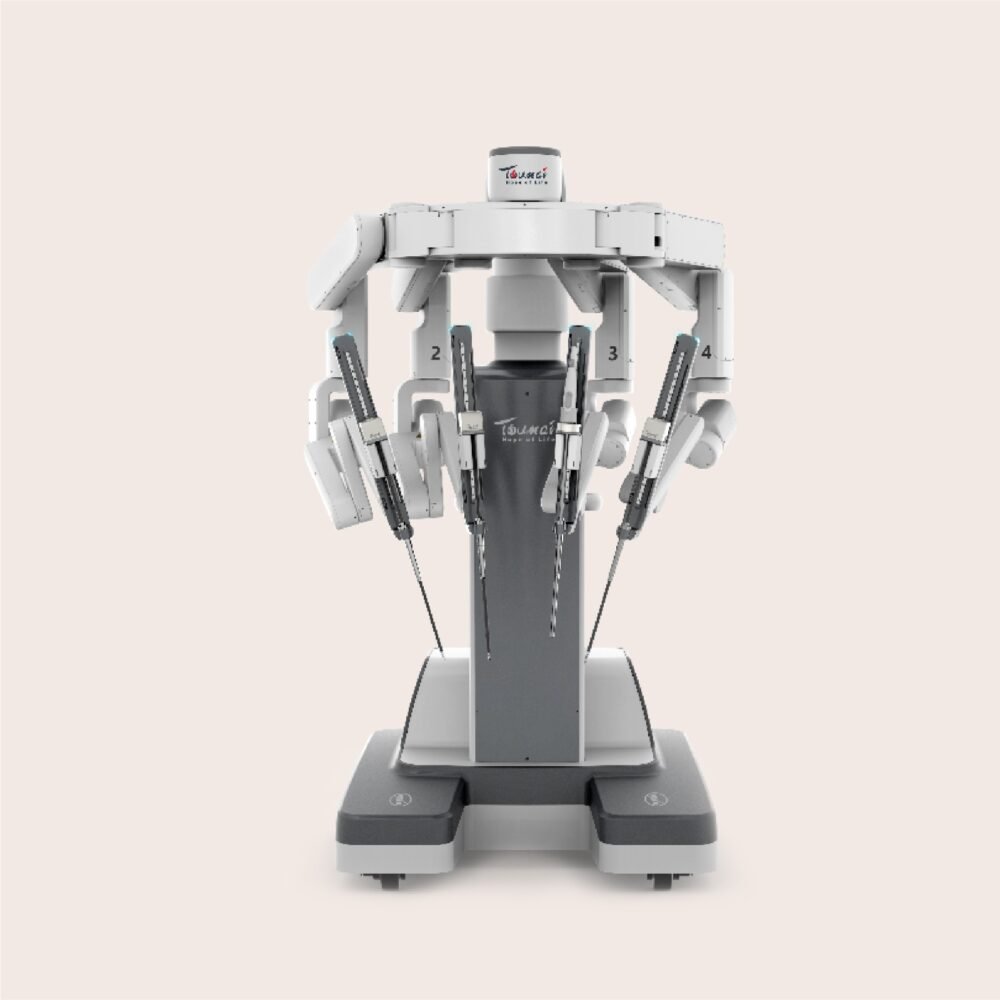 human capabilities. It is a technology that combines the natural human talents — vision and motor skills — with digital precision. It is often mistakenly believed that the robot itself performs the operation. In reality, the robotic system is a high-tech instrument fully controlled by the surgeon. It has no independent ability to act or make decisions.
The surgeon controls the system from a special console, where he has:
- 10× magnified visualization — providing a level of detail impossible for the human eye.
- 3D vision — for maximum precision in perceiving tissues and anatomical structures.
- Digital precision — the robot filters natural hand tremor and enables manipulation where the human hand cannot operate.
At the Karazanashvili Robotic Center, one of the most advanced and innovative systems in the world is available — Toumai. It is a fourth-generation high-tech robot that competes with Da Vinci and in many aspects sets new standards.
Robotic Surgical Treatment of Prostate Cancer
In the fight against prostate cancer, robotic surgery is considered the “gold standard” of modern medicine. Its main advantage is precision and minimal trauma, which directly affects the patient’s quality of life.
Robotic Radical Prostatectomy vs Laparoscopy and Open Surgery
- With the robotic method, the incision is minimal, and blood loss is practically zero. This determines a short and less traumatic rehabilitation period.
- Although laparoscopy is also minimally invasive, the robot allows the surgeon to preserve the nerve bundles around the prostate with maximum precision. This is crucial for maintaining two of the most important postoperative functions — urinary continence and erectile function.
A New Era of Surgical Precision (Precision Medicine)
The robotic system provides the surgeon with 10× magnified imaging and 3D visualization, ensuring a level of detail impossible for the human eye.
- Nerve-sparing operations: around the prostate pass millimeter-thick nerves responsible for erection and urinary continence. The robot gave the Karazanashvili team the opportunity to separate these nerves from tumor tissue with maximum precision.
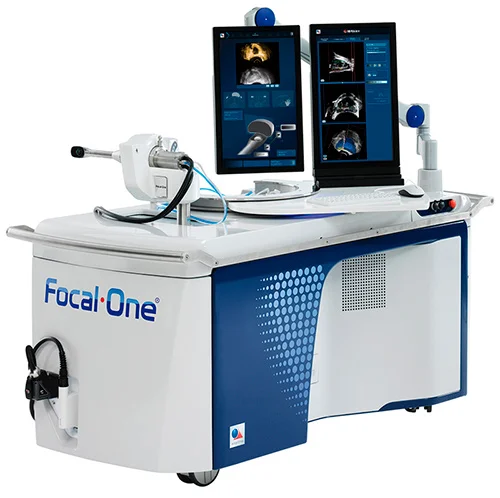 “Focal One” — The Possibility of Organ Preservation
Five years ago, the center implemented Focal One (robotic focal therapy), which is unique in the region. Before that, the standard treatment for prostate cancer was removal of the entire organ. With robotic focal therapy, it became possible to destroy only the tumor focus using high-intensity focused ultrasound (HIFU), while leaving the prostate intact.
Robotic Management of Oligometastatic Prostate Cancer
Previously, if the cancer had spread beyond the prostate (metastases), surgical intervention often lost its meaning or was extremely complex. Robotic technology and a multimodal approach gave the Karazanashvili Center the opportunity to:
- Perform complex combined surgeries with minimal blood loss.
- Improve patient survival rates even in metastatic forms.
Robotic Surgery for Benign Prostatic Hyperplasia (Adenoma)
Robotic surgery is also successfully used for the treatment of benign prostatic hyperplasia (adenoma), especially in cases of large adenomas.
- Robotic adenomectomy vs open surgery: the robot eliminates the need for a large incision and reduces the risk of complications.
- TURP (transurethral resection) and HoLEP (holmium laser): although TURP and HoLEP are effective, in cases of very large adenomas (for example, more than 100–150 grams), robotic adenomectomy often provides a more radical and stable result than manipulations performed through the urethra, with a lower risk of urethral stricture.
Robotic Surgical Treatment of Bladder Cancer
The treatment of bladder cancer, specifically radical cystectomy (removal of the bladder) and subsequent reconstruction (creation of a new bladder), is considered one of the most complex and large-scale operations in urology and oncologic surgery. The approach of the Karazanashvili Robotic Center combines decades of experience and the latest technological achievements.
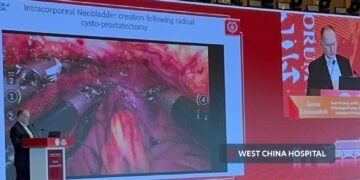
For decades, open cystectomy (removal of the bladder through an incision) with the creation of a new artificial bladder (Neobladder) was successfully performed at the center. It is important to note that the original technique of this operation, developed by the center’s team, was repeatedly presented at the congresses of the American Urological Association (AUA). It was internationally confirmed that this technique significantly reduces postoperative complications and preserves a high quality of life for the patient.
Today, this highly complex operation is already performed at the center using a robotic system. If previously open surgery required a large incision and prolonged rehabilitation, the robot completely changes this process:
- Minimization of complications: the robotic approach significantly reduces serious risks such as thromboembolic complications and wound dehiscence (suppuration), which were major challenges in open surgery.
- Minimal blood loss and pain: the postoperative period is practically painless, as there is no wide tissue trauma.
- Fast rehabilitation: patients return to their normal rhythm of life much faster, which is critically important for oncology patients.
Robotic New (Artificial) Bladder (Neobladder)
The creation of an artificial bladder using robotic technology is a top-level achievement in modern surgery. This process requires exceptional surgical mastery and technological perfection.
“The creation of a robotic artificial bladder at the Karazanashvili Robotic Center is proof that the development of robotic surgery here has reached the highest global level.”
This achievement means that despite bladder removal, the patient is given the chance to have a functional organ that максимально replicates the natural one, and the operation is performed safely, without blood loss and prolonged suffering.
Robotic Surgical Treatment of Kidney Tumor
In the treatment of malignant kidney tumors, the main challenge of modern medicine is not only tumor removal, but also maximum preservation of healthy kidney tissue (Partial Nephrectomy). Robotic surgery has a decisive advantage in this direction.
Robotic Kidney Resection vs Open and Laparoscopic Surgery
During kidney resection (partial removal), the surgeon must temporarily clamp the renal vessels in order to remove the tumor in a bloodless field. Here every second is crucial for preserving kidney function.
- Open surgery requires a large incision in the lumbar or abdominal area, often even removal of a rib, which is highly traumatic for the patient. The robot performs all of this through several small holes (ports).
- Although laparoscopy is also minimally invasive, it does not provide the same 3D visualization, 10× magnification, and 360-degree range of motion as the robot. The robot allows the surgeon to suture the kidney defect much faster and more precisely after tumor removal. This reduces the risk of renal ischemia (interruption of blood supply), which directly affects how well the organ will function after surgery.
Experience at the Karazanashvili Robotic Center
At the Karazanashvili Robotic Center, kidney-sparing robotic surgeries are performed at the highest level and with great success.
The uniqueness of the center lies in the fact that, with the help of the robotic system, the surgical team is able to remove tumors up to 7–8 centimeters in size while preserving the kidney. In practice, in cases of large tumors, complete removal of the kidney (nephrectomy) is often preferred; however, the experience of the Karazanashvili Center and robotic technology make it possible to remove even such complex lesions without damaging the organ.
As a result, the patient preserves a vital organ, avoids the risk of kidney failure, and returns to active life within a few days after surgery.
Use of Robotic Surgery in Gynecology and Colorectal Surgery
Gynecology and Oncogynecology
In the treatment of gynecological diseases, the robot allows the surgeon to work with millimeter precision, which is crucial both for organ preservation and radical tumor removal.
- Cervical cancer: in this diagnosis, radical hysterectomy is often required. Robotic surgery allows maximum precision in the dissection of tissues and lymph nodes adjacent to the cervix. Superior visualization and magnified imaging help the surgeon avoid injury to the ureters and major vessels, which in open surgery are associated with high risks.
- Preservation of reproductive function: during removal of uterine fibroids (myomectomy), the robot ensures ideal reconstruction of the uterine wall, preserving the woman’s ability for future pregnancy and childbirth.
Colorectal Surgery
Operations on the colon and rectum are among the most complex fields where the robotic system is indispensable.
In the narrow space of the small pelvis, the robotic arms operate with such precision that they minimize the risk of damage to nerves responsible for genitourinary function.
- Ideal anastomosis: when connecting the intestines (anastomosis), the robot ensures the highest quality suturing, which practically eliminates the risk of leakage.
Experience and Trust
More than 300 robotic surgeries performed in 2 years is an indicator by which Georgia has equaled leading clinics in Turkey. For a patient, the surgeon’s experience is decisive, and when there is a team in the country with unique experience in creating a robotic artificial bladder or resecting a 7–8 centimeter tumor, the need to go abroad loses its meaning.
The “Treatment at Home” Factor
Oncological treatment is a long and stressful process. When a patient receives within the country the same (and often better) quality as in Turkey:
- They avoid the language barrier, transportation costs, and additional expenses of living in a foreign country.
- The rehabilitation process in one’s own environment is much faster and psychologically easier.
Price and Quality
At the Karazanashvili Robotic Center, the quality of treatment fully complies with Western standards (USA, Germany), yet financially it is significantly more affordable for Georgian patients than similar services in high-tech clinics in Turkey or Europe.
International Hub Status
This technological arsenal has turned the center into an epicenter of medical tourism. Today, the Karazanashvili Robotic Center is no longer just a local clinic — it is a leading institution across Eastern Europe, the Black Sea region (including Turkey), the Caucasus, and Central Asia, where patients travel to receive world-class, highest-quality service.
“The Karazanashvili Robotic Center” is a place where the latest technology and many years of experience stand guard over the patient’s life and health.